"We work to promptly eliminate global environmental pollution caused by disasters and wars both in Japan and abroad." |
Organization Overview
About the History of the Organization
Established in 1992
The organization was founded with the goal of promptly addressing environmental pollution caused by disasters and wars, both in Japan and abroad.
In June 1992, it was officially certified as an NPO in Aomori Prefecture and began its activities with 28 members, aiming to protect the natural environment and support agricultural sustainability.
Initially, the organization focused on assisting farmers by providing free support for organic farming certification.
*In 1999, the organization was registered as an NPO corporation in the Cabinet Office's NPO Corporation Database.
Competent Authority: Aomori Prefecture
Registered Name: Ecological Research Center, a Specified Nonprofit Corporation
Office Location : Headquarters: Sanwa, Hirosaki City, Aomori Prefecture, Japan
Tokyo Office: Higashi-Kojiya, Ota City, Tokyo, Japan
Representative: Kinuko Fujibayashi
Corporate Number: 342000503556
Date of Dissolution: December 31, 2003
Reason for Dissolution: Resolution of the General Assembly (Article 31, Paragraph 1, Item 1 of the NPO Act)
*In 2003, the organization was restructured as a new NGO corporation and made a fresh start. In the case of an NPO, it is necessary to proceed with various activities based on budgets and business plans that are approved by member voting. When conducting support activities for disasters occurring across the country, there are institutional limitations that require gathering members, deciding on a budget, and then initiating activities. However, in the case of urgent disaster support such as during the Kobe or Mt. Aso disasters time constraints hindered immediate response, resulting in various difficulties and inconveniences in carrying out activities.
Therefore,based on the Chairperson's experience in the United States, the organization was restructured and relaunched as a Non-Governmental Organization (NGO). This change allowed for greater flexibility in operations, enabling the organization to respond more quickly to emergencies without being hindered by domestic bureaucratic procedures. Additionally, becoming an NGO opened the door for international activities and collaborations, making it possible to extend support beyond national borders.
NGO stands for Non-Governmental Organization.
It is an independent, non-governmental organization that operates without affiliation to any government or international agency, committed to addressing pressing global social and environmental issues through advocacy, support services, and collaborative action.
Examples of the social issues that NGOs aim to address include the following.
*Protection of Human Rights
*Environmental Protection
*Provision of Education
*Provision of Medical Care
*Poverty and Hunger Alleviation
The term "non-governmental" is deliberately used to distinguish such organizations from governmental bodies, particularly in the context of United Nations deliberations. As national governments routinely participate in various UN forums, the designation "non-governmental organization" was adopted to refer to independent, civil society groups that operate autonomously from any state authority.
NGOs and NPOs are similar but differ in definition.
An NPO, or Non-Profit Organization, is a civic entity that does not seek to generate profit but is instead dedicated to achieving a specific social mission. According to the Japan NPO Center, "non-profit" is defined as an organization that does not distribute profits to its members but uses all resources to further its mission-driven activities. In Japan, organizations that address international issues are often referred to as NGOs, while those that focus on domestic issues are commonly called NPOs. Even when organizations engage in similar types of activities, they are typically classified as NPOs when the emphasis is on their non-profit nature, and as NGOs when the focus is on their independence from government and their role as representatives of civil society.
Our organization is particularly dedicated to environmental protection and engages in daily activities with this mission at its core.
Efforts to protect forests and oceans are also spearheaded by NGOs. A defining characteristic of these organizations is their involvement in both policy advocacy based on environmental research and direct environmental conservation activities, such as reforestation in tropical rainforests. In recent years, initiatives aimed at preserving biodiversity have also garnered significant attention.
How We Can Help NGOs Make a Difference?
Now that the significance of NGOs has been outlined, some individuals may still feel that the scale of their missions presents a barrier to direct involvement. While it is true that participating as an active member of an NGO may not be feasible for everyone, there are meaningful ways in which individuals can contribute to and support these organizations. One such method is through financial contributions. Donating to an NGO whose mission aligns with your values is a tangible and impactful form of support. Even modest donations can provide critical funding that enables the continuation of essential activities. Our organization is currently preparing to launch a crowdfunding initiative to secure funding for decontamination efforts, in collaboration with the Aomori Scallop Waste Disposal Cooperative Association. Details regarding this initiative are presently being finalized, and we sincerely welcome your future participation and support.
> Crowdfunding (Under Preparation)
"There are various additional ways to engage in actions that align with the values and mission of an NGO."
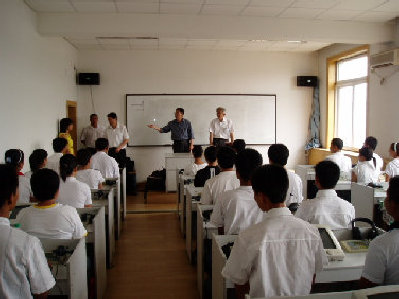 *Save electricity and water in your daily life
*Join volunteer activities
*Attend workshops organized by NGOs
By getting involved in these simple ways, you can connect with NGO staff and learn more about what kind of help is needed.
"For more detailed information about our organization, click here."
---> Organization Profile
Contact Email Address: erc1@ymail.ne.jp

Copyright (C) 2025 Ecorogical Research Center , All rights reserved.
