"We work to promptly eliminate global environmental pollution caused by disasters and wars both in Japan and abroad." |
Activity Report
*Aomori Scallop Shell Waste Disposal Cooperative - From May 2025
Aomori Prefecture
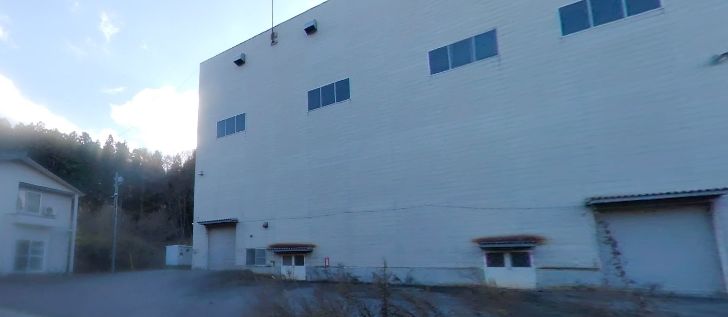
In May 2025, we acquired the factory formerly operated by the Aomori Scallop Shell Waste Disposal Cooperative, and we are now preparing to carry out decontamination work.
This facility had long been in operation as a scallop shell processing plant. However, over time, harmful substances generated through the disposal process accumulated within the site, rendering continued operations as a disposal facility unsustainable. Accordingly, we purchased the factory from the cooperative with the aim of repurposing and revitalizing the facility.
For future use and development, the purchase included the factory facilities as well as approximately four hectares of surrounding forest land."
The plan is to repurpose this building and start a new business operation by May next year.
For more details ---> Eco Factory Construction Project
*Okinawa Asbestos Disposal Forum - August 2021
Okinawa Prefecture
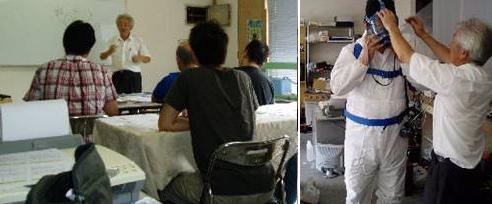
At the request of local environmental industry stakeholders, an asbestos management forum was held in Naha City, Okinawa Prefecture.
On the same day, a special training session on asbestos handling was also conducted.
Aomori Prefecture, where the Ecological Research Center was founded, takes pride in being one of the most advanced regions in Japan in both environmental policy and asbestos disposal initiatives.
It is believed that this progress is the outcome of significant efforts by the relevant government agencies in addressing past cases of illegal industrial waste dumping.
In addition, it is believed that asbestos disposal efforts were significantly influenced by the strict oversight and guidance of the U.S. government specifically the military and the Environmental Protection Agency (EPA) during the remediation at Misawa Air Base in Aomori Prefecture.
A recent internal report revealed the poor state of asbestos management at a U.S. military base in Okinawa a situation that, when compared to regions such as Aomori, Zama, and Fussa, appears to represent a regression of nearly 20 years in progress
"According to statements from individuals associated with the base, it is believed that the absence of qualified chemical technicians capable of overseeing management was due to their deployment to Iraq."
The ongoing conditions at Kadena Air Base are deeply troubling, and resolution appears to depend on the efforts of local construction professionals and relevant military personnel.
Therefore, we concluded that the most effective way to address the issue was to promote awareness of best safety management practices, which led to the decision to hold this seminar for construction-related businesses.
The forum was held from early afternoon until 9 p.m. and was filled with great energy and enthusiasm.
Moving forward, we call for ongoing commitment from the relevant parties in Okinawa and greater self-reflection and responsibility from the general contractors involved in the construction.
*Great East Japan Earthquake Response - June to November 2011
Miyagi Prefecture
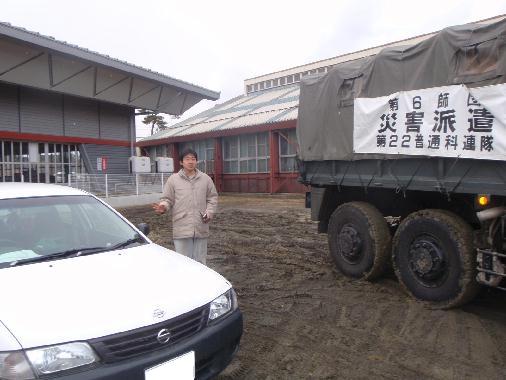
In support of Shichigahama, we transported stockpiled supplies including athletic shoes and matches to the local distribution center.
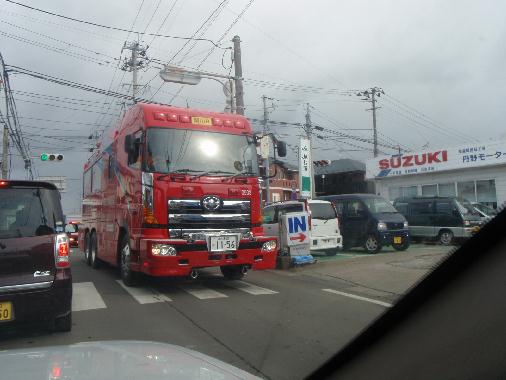
Many rescue teams from other prefectures have rushed in and are actively engaged in operations.
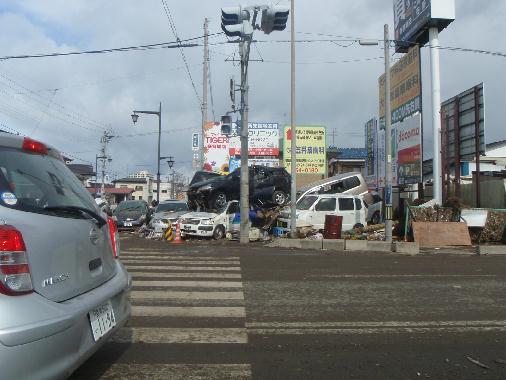
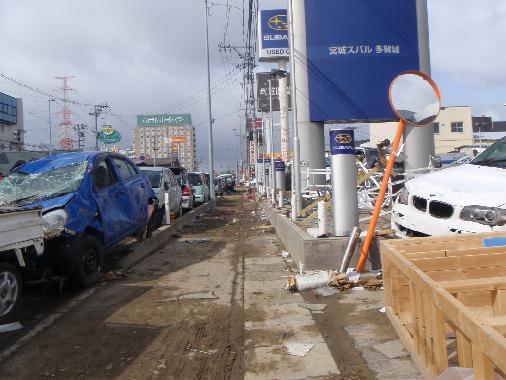
This is a view of the area along National Route 45 in Tagajo City, Miyagi Prefecture, which sustained damage from the tsunami.
Fukushima Prefecture
Following the Great East Japan Earthquake, decontamination efforts were carried out on various lands and buildings that had been contaminated outside of Fukushima Prefecture.
However, in the absence of any guidance from the national government, residents spent their days in deep uncertainty and anxiety.
Accordingly, at the request of a major general contractor engaged in the reconstruction of the Fukushima nuclear power plant, we assisted in the recovery operations.
1. Preparation of a decontamination manual and implementation of training.
In Ono Town, Fukushima Prefecture where radiation levels are relatively low we developed a technical decontamination manual, conducted special training on techniques for handling ionizing radiation and issued certificates of completion, with the aim of making these resources available to the general public, regardless of occupation or age.
2. Implementation of land inspections
We provided soil contamination testing and related services at no cost.The decontamination technical manual was made available online.Furthermore, we raised the issue with the national government regarding the lack of iodine tablet distribution to residents in nuclear affected areas.
In light of the potential for an incident similar to those that have occurred in France, we proposed a system to provide iodine tablets free of charge to local citizens.
This led to the successful implementation of free iodine tablet distribution for residents in municipalities near nuclear power plants across Japan.
At the time, the Executive Director (curently serving as President) entered the contaminated area, where through investigation activities and emergency decontamination work he was exposed to radiation levels three times higher than Japan's human exposure standard. As a result, it was decided that he would leave Fukushima in November.
Contact Email Address: erc1@ymail.ne.jp

